If your Winter Park bungalow has charm to spare but you are wondering whether today’s buyers will see it the same way, you are asking the right question. Buyers still love character, but they also compare every home against polished online photos, video tours, and homes that feel move-in ready. The good news is that you usually do not need a full remodel to make an older home stand out. You need a smart plan that highlights what makes your bungalow special while helping buyers picture daily life there. Let’s dive in.
Why staging matters in Winter Park
Winter Park buyers are often looking at more than square footage. They are also reacting to presentation, upkeep, and whether a home feels true to its style. That matters in a city where historic architecture is part of the local identity and where more than 700 historic structures have been recorded.
Current market conditions make presentation even more important. Redfin’s May 2026 snapshot showed a Winter Park median sale price of about $799,522, an average of 27 days on market, and a 95.9% sale-to-list ratio. At the same time, ORRA reported the broader Orlando area averaged 83 days on market in February 2026 with 6.34 months of supply, which means buyers have time to compare homes carefully.
Staging also shapes how buyers respond before they ever schedule a showing. According to the 2025 Profile of Home Staging, 83% of buyers’ agents said staging makes it easier for buyers to visualize a home as their future home. In a market where many buyers begin online, that first impression can influence everything that follows.
Highlight the bungalow’s original character
A Winter Park bungalow should not try to look like a brand-new flip. It should feel polished, bright, and well cared for while still showing off the details that give it personality. In many cases, the strongest selling point is authenticity.
Classic bungalow and Craftsman homes usually include features like low-pitched roofs, wide eaves, exposed rafters or braces, and a full or partial front porch supported by sturdy columns. Inside, Winter Park’s preservation guidance specifically points owners toward character-defining details such as heart pine floors, fixtures, cypress paneling, and built-ins. Those elements deserve attention during staging because they help the home tell a clear story.
That means your prep should focus on revealing, not hiding, the home’s best original features. Clean and refinish surfaces where needed, simplify decor around built-ins, and avoid furniture layouts that block architectural details. Buyers should walk in and immediately understand what makes the home distinct.
Focus on the rooms buyers notice most
If you are deciding where to spend time and money, start with the spaces buyers care about most. The 2025 staging report found that the living room was the most important room to stage at 37%, followed by the primary bedroom at 34% and the kitchen at 23%.
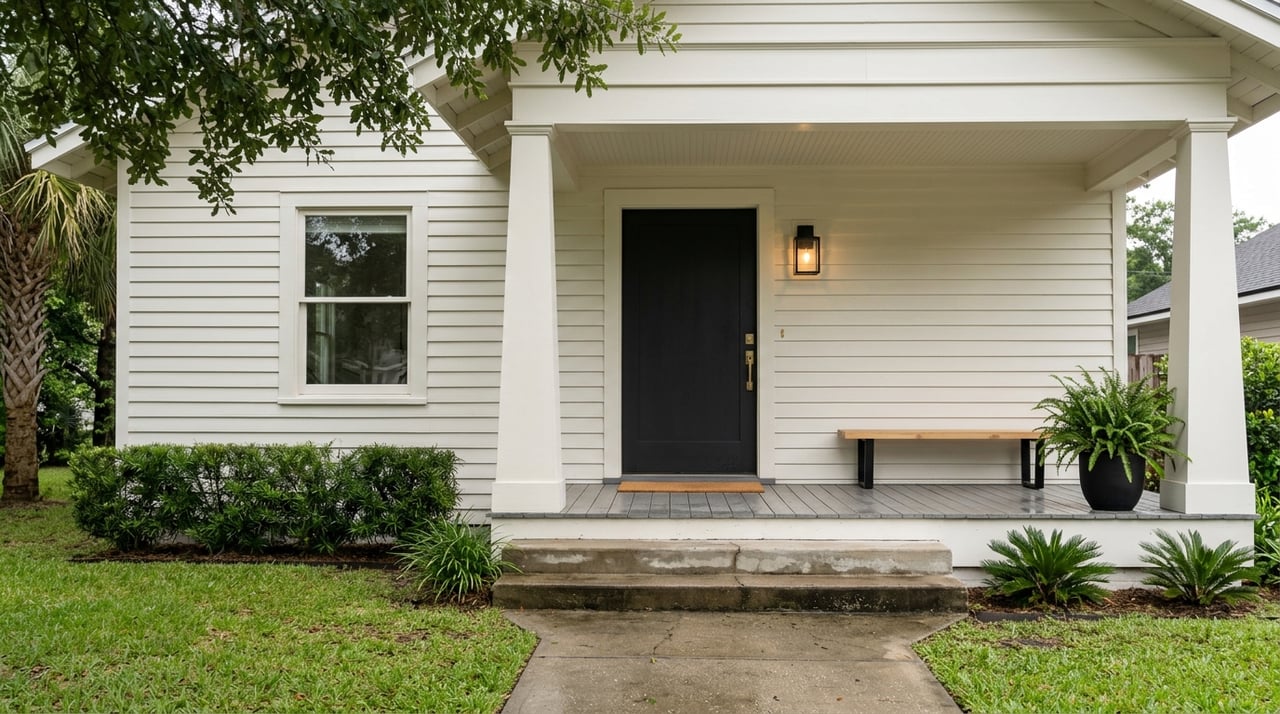
In a bungalow, the front porch and entry should also move to the top of the list. The porch is one of the defining features of the style, and in Winter Park it often sets the tone before a buyer reaches the front door. A clean porch, simple seating, and a neat entry sequence can make the house feel welcoming right away.
Stage the living room first
The living room often carries the emotional weight of the home. In a bungalow, that may mean built-ins, a fireplace, original trim, or warm flooring. Your goal is to make the room feel open and easy to use without stripping away its charm.
Use a lighter furniture layout that keeps pathways clear and lets architectural features stay visible. Limit extra pieces, reduce personal items, and choose neutral accessories that support the room instead of competing with it. If the room is small, right-sized furniture matters more than trying to fill every corner.
Keep the primary bedroom calm
Buyers want the primary bedroom to feel restful and functional. That is especially important in older homes where bedrooms can be smaller or have unusual layouts. A simple bed setup, clear nightstands, soft bedding, and minimal decor can help the space feel larger and more useful.
Remove anything that makes the room feel crowded or too personal. If there is attractive trim, flooring, or built-in storage, make sure it remains visible. The room should feel calm, not staged to the point of looking stiff.
Simplify the kitchen
You do not need a full kitchen overhaul to make a good impression. For many sellers, the better move is to clean thoroughly, repair obvious issues, clear counters, and create a fresh, neutral look.
Older bungalows often benefit from editing rather than replacing. If the kitchen has details that fit the home’s age and style, lean into those while presenting the room as tidy and easy to maintain. Buyers tend to respond well when a kitchen feels both usable and true to the home.
Aim for polished, not generic
Many buyers now expect homes to look like they were staged on TV. In the same 2025 staging report, 48% of respondents said buyers expected that level of presentation, and 58% said buyers were disappointed when homes did not match the expectation.
That does not mean your bungalow should lose its identity. It means the home should feel photo-ready, uncluttered, and intentional. The most effective approach is usually a polished version of the original home, not a trendy redesign that erases its history.
NAR’s staging guidance points to practical basics: clean, declutter, repair, depersonalize, use neutrals, and create versatile spaces. For a Winter Park bungalow, those basics work best when paired with preserved wood tones, visible craftsmanship, and a layout that feels natural.
Decide between staging and remodeling
One of the most common seller questions is whether the whole house needs to be remodeled before listing. Usually, the answer is no. In many cases, selective presentation work delivers a better return than taking on a large renovation close to market.
The staging report found that the median amount spent when using a staging service was $1,500. It also noted that many sellers’ agents did not stage every listing and instead recommended decluttering or fixing property faults first. That is a useful reminder that high-impact basics often do more than expensive changes.
A practical strategy is to separate true repairs from cosmetic upgrades. Start with visible maintenance issues, then improve the spaces buyers notice most, and only after that decide whether partial staging would complete the presentation.
A smart prep order
- Fix anything that reads as deferred maintenance
- Deep clean every room
- Declutter storage, counters, and surfaces
- Depersonalize art, photos, and collections
- Refresh the living room, primary bedroom, kitchen, and porch
- Evaluate whether partial staging is enough
- Schedule photography, video, and virtual tour assets once the home is fully ready
Plan exterior changes carefully
If your bungalow is a designated historic property, exterior work may need extra attention. Winter Park states that interior remodeling is not reviewed, but exterior additions or alterations to designated historic properties may go through the city’s design review process. Those changes are reviewed for compatibility with the existing historic pattern.
For sellers, that means timing matters. If you are thinking about exterior paint, trim, windows, railings, or an addition before listing, confirm requirements early so you do not create delays close to market. Even when your goal is simply to improve curb appeal, the work should support the architecture rather than conflict with it.
Treat curb appeal like part of staging
Curb appeal is not separate from staging in a bungalow. It is part of the product. Buyers often form an opinion before they walk inside, and the porch, front walk, and planting beds shape that first reaction.
UF/IFAS notes that Florida-Friendly landscapes can be beautiful while conserving water and protecting natural resources. For sellers, the most useful principles for curb appeal are right plant, right place; watering efficiently; and mulch. UF/IFAS also notes that mulch creates a neat, uniform appearance while helping control weeds and retain moisture.
In practical terms, that often means a tidy front path, trimmed plantings, healthy beds, fresh mulch, and an exterior that looks manageable. Buyers do not need a complicated garden display. They need to feel the home has been cared for.
Make online marketing count
Because so many buyers start online, staging should support the way your home will be marketed. The 2025 staging report found that buyers’ agents viewed photos as highly important at 73%, followed by physical staging at 57%, videos at 48%, and virtual tours at 43%.
That fits how buyers shop in Winter Park and across Central Florida. A well-staged home does more than show better in person. It also performs better in listing photos, video, and virtual tours, where buyers are making quick comparisons.
This is where a disciplined marketing plan matters. When your home is prepared thoughtfully, every photo angle, room layout, and porch detail works harder to attract serious attention.
What today’s buyers want to feel
At the end of the day, buyers want clarity. They want to understand how the home lives, whether it has been cared for, and whether its character feels genuine rather than patched over.
A well-staged Winter Park bungalow should feel warm, functional, and authentic. It should show off the craftsmanship that makes older homes appealing while removing the distractions that cause hesitation. When you strike that balance, your home is easier for buyers to remember and easier for them to imagine as their own.
If you are getting ready to sell a Winter Park bungalow, the right strategy can help you protect its character and present it with purpose. For a tailored plan built around timing, presentation, and local market expectations, connect with Omar Cotto.
FAQs
Do I need to remodel my Winter Park bungalow before selling?
- Usually no. Cleaning, decluttering, repairing visible issues, depersonalizing, and selectively staging key rooms are often enough to improve buyer response.
Which rooms matter most when staging a Winter Park bungalow?
- The living room, primary bedroom, and kitchen are the top priority rooms based on the 2025 home staging data, and the front porch should also be a focus in a bungalow.
Can I change the exterior of a historic Winter Park home before listing?
- Possibly, but exterior additions or alterations to designated historic properties may go through Winter Park’s design review process, so it is smart to confirm rules early.
What original bungalow details should stay visible during staging?
- Features like heart pine floors, fixtures, cypress paneling, built-ins, porch columns, and other character-defining details should usually remain visible and be presented as well cared for.
Why does curb appeal matter for a Winter Park bungalow sale?
- Buyers often react to the porch, yard, and front façade before they enter, so a tidy walk, healthy planting beds, and clean exterior lines can improve the first impression.